
Boosting Resiliency for Smart Grids

Boosting Resiliency for Smart Grids

In this rapidly changing, modern day digital landscape, ensuring the full reliability and resiliency of the smart grid is a growing challenge. How do we ensure the system will be able to “bounce back” and recover effectively from an outage? The explosion of the Internet of Things (IoT) introduced a wide variety of smart devices and products to bring increased connectivity. Couple this with outdated infrastructure, and the vulnerability of the grid to potential outages and malicious attacks has increased.

We saw that resiliency challenge manifest in the recent wake of Hurricane Harvey in Houston, Hurricane Maria in Puerto Rico, and even after Superstorm Sandy back in 2012, where millions of people were without power for days. In the case of Puerto Rico, more than 450,000 still remain without power, now four months after the storm hit. These types of outages are coming at a steep price – a 2013 U.S. Department of Energy study found that power outages caused by extreme weather had an average economy-wide cost of $18-$33 billion from 2003-2012. Consider this along with the growing concern for grid cybersecurity—with the U.S. Energy Department indicating that the electricity system “faces imminent danger” from cyber-attacks—and it’s no surprise that resilience of the grid should be a top priority for utilities.

To maximize the full capability of the smart grid, investments need to be made in more resilient infrastructure and technology solutions to strengthen the grid’s resiliency against unplanned events, from weather to security. A critical piece of this is in considering innovative technology solutions that can evaluate real-time performance and provide the information needed to act proactively, efficiently and effectively in the event of a problem.

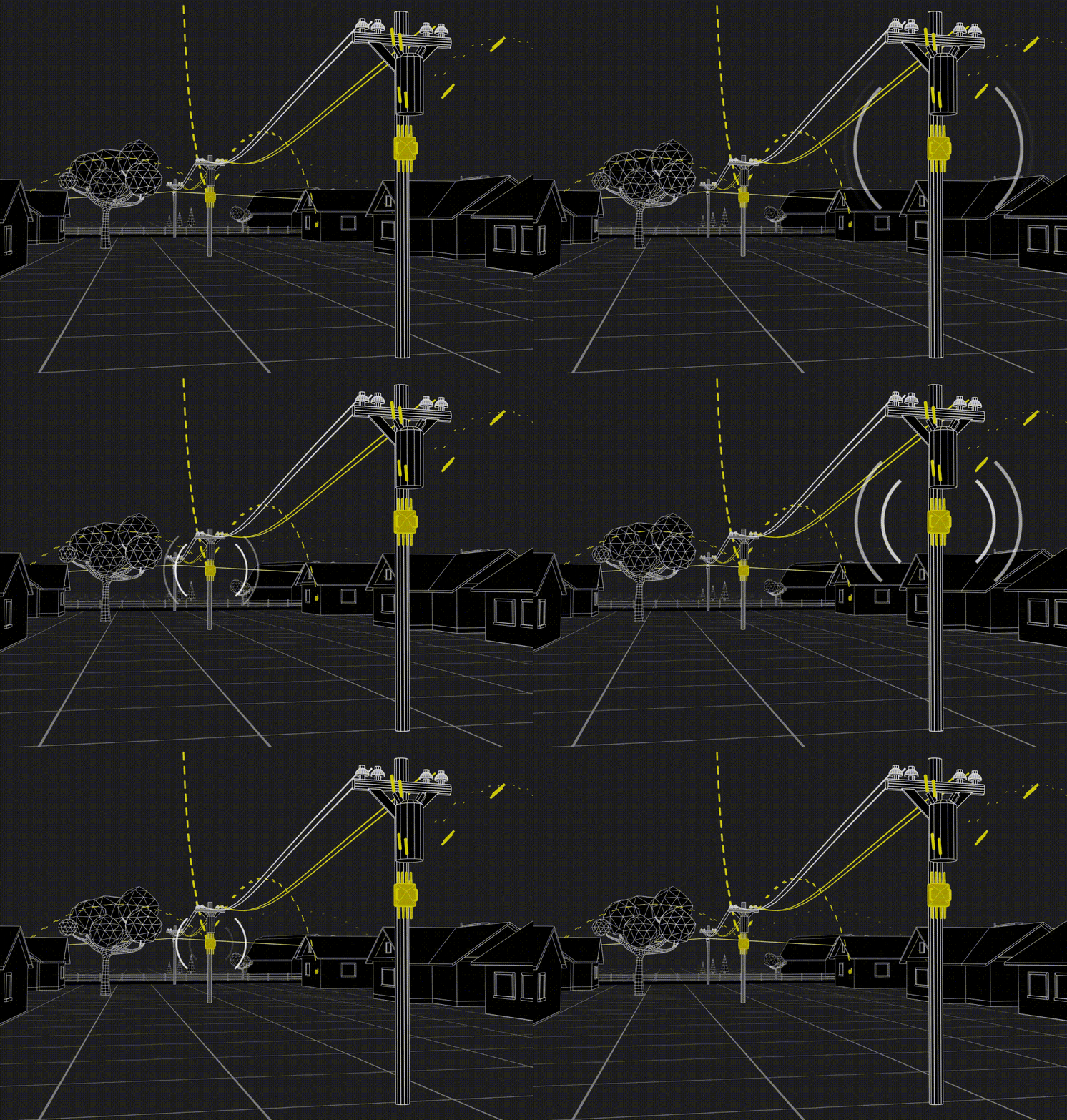
For example, our Delta Smart Grid Network (DSGN™), brings real-time data capability and active IoT device integration wherever there is electricity. The network can provide utilities with actionable data and visibility into their systems and how those systems are operating through the use of our cloud-based analytics platform.

This infrastructure will enable utilities to more easily identify issues for immediate action, whether those stem from natural disasters, cyberattacks or other issues. For example, if there is a reported outage, a utility can quickly identify the location of the problem, which is typically a time-intensive, manual effort. In providing this increased visibility, utilities are empowered and the resiliency of the grid, in turn, is improved.

Another solution to boosting grid resiliency could be found in considering distributed energy, energy storage and microgrids. In one example from Hurricane Harvey, more than a dozen Houston H-E-B stores were able to keep their lights and resources on for their respective communities due to having natural-gas powered microgrids in place.

Augmented Reality

Augmented Reality

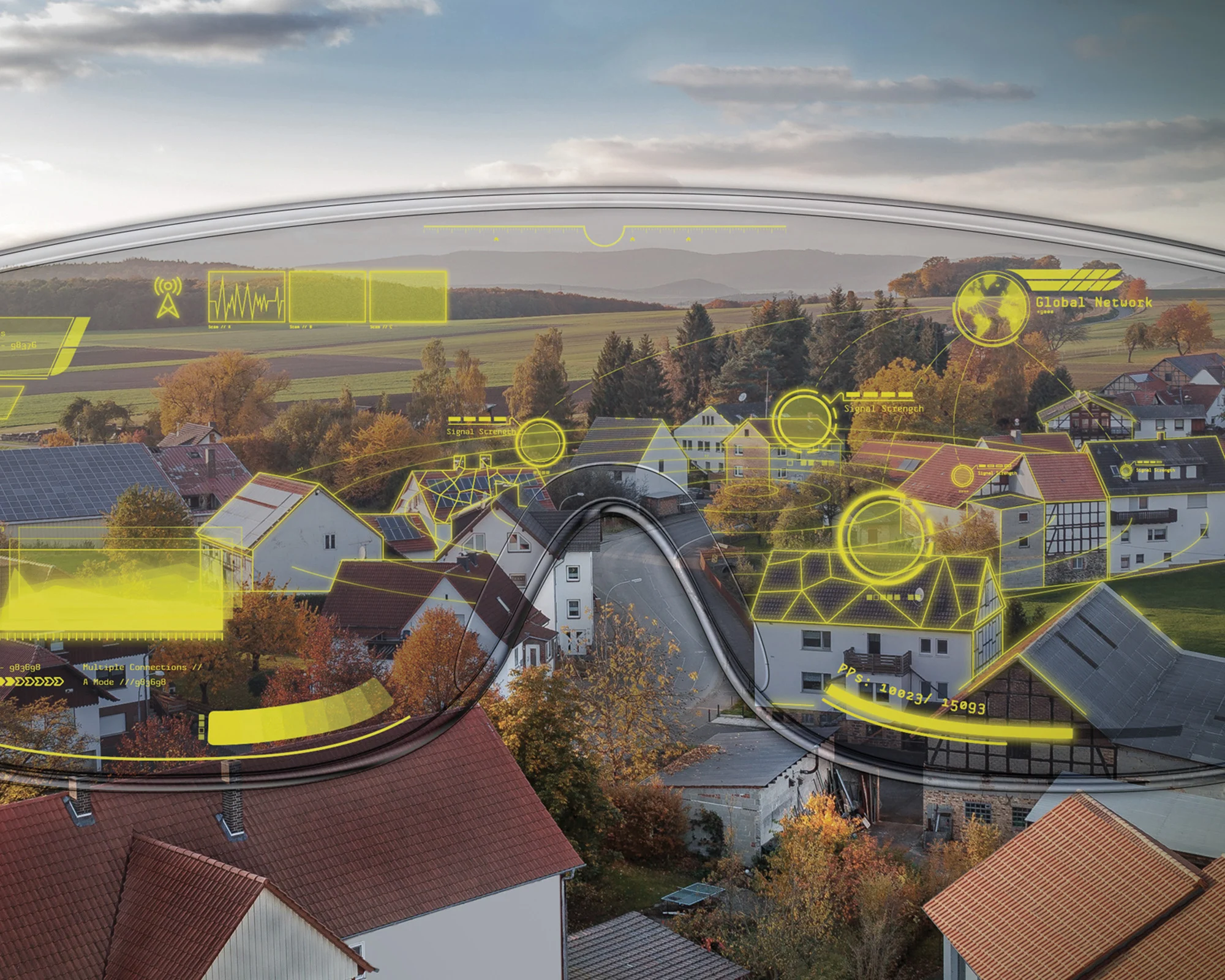
A utility field technician’s day is filled with frequent stopping and starting to access and assess the distribution system—and the utility bears the burden of what happens when resources get stretched too thin. How can it make sure that the right data is available to the right person, in the right format and at the right time and place in order for the insights from that data to provide practical value? One way is to bring augmented reality (AR) tools to the utility’s field force. By equipping field personnel with AR tools, utilities can streamline things like asset health assessments, service documentation review, repair requirement summaries, repair qualification activities, work order prioritization, location routing and more.

One example of using AR to improve efficiencies is demonstrated in a 2017 proof of concept between the Electric Power Research Institute (EPRI) and Duke Energy which tested the use of augmented reality in assessing storm damage. In the project, field workers wore a heads-up display (HUD) unit incorporating a monocular screen that provided key information to keep assessments accurate and consistent. This screen overlaid information on the user’s field of view, enhancing their capability to real-time visualize actionable date on that subject matter at hand. The field crews were very positive about their experience and Duke Energy calculated that for a typical, 4-day outage impacting 250,000 customers, using AR would save around 12 hours of restoration time—or $8.25M for customers with an average power consumption of 900kWh per month.

Another way AR could be used is for general servicing and repair. Augmented reality would be able to overlay key performance data into the field of vision for a service technician allowing him or her to immediately assess the health of an asset. For example, being able to see the load, temperature and oil level of a transformer simply by looking up at it with an AR device would expedite identification of any issues. This AR capability would instantly allow a field technician to prioritize service actions against multiple assets within their field of view, all without opening, powering and inquiring using traditional keyboard centric field devices.
It’s important to note, according to EPRI’s 2018 literature review of human factors issues in the Electric Power Industry, there is still a shortage of human factors and occupational safety research for AR devices.

Therefore, guidelines for the appropriate amount of time for safe and effective AR usage are lacking. This being true, as the technology progresses and electric utilities continue to experiment with using it more information will become available and, similar to other adjacent markets, we anticipate pick-up in adoption of this exciting user interface methodology.

Microgrids

Microgrids

The major intention for microgrids, small-scale power grids that can operate independently or in conjunction with an area’s main electrical grid, is that they can power themselves and operate independently in the case of an outage with the central grid. Recently, they have been thrust into the spotlight as a potential solution to add resiliency to the electric grid after major natural disasters—like Hurricane Maria last year and Superstorm Sandy in 2012. Their capability to fully disconnect from the grid and operate independently, if needed, is alluring to those who seek to increase the resiliency of the electrical grid, but they are just one part of a multi-faceted solution to prevent future failures of the grid.

Microgrids are popping up across the U.S. and, outside of the U.S., they’re gaining more attention—particularly in developing countries where there might be no grid power and microgrids offer a safe and reliable alternative. In fact, a recent report from IDC indicates that “through 2020, emerging markets will offer the largest growth opportunity for microgrids, reducing the need for bulk transmission systems and creating new revenue streams for up to 25 percent of utilities worldwide in the form of microgrid as a service (MaaS).”

Regardless of location, a combination of microgrids, smart grid technologies, distributed generation resources and operational analytics and intelligence will help enhance the grid’s resiliency. Despite the many opportunities that microgrids present, they are only one piece to the puzzle of battling the shortcomings of the overall grid and future failures. There is a common misconception that microgrids alone can be substitutes for the larger electric grid. But ultimately, if a microgrid is serving more than one building, it’s relying on much of the same grid as we use today.

Instead, we must capitalize on the opportunities presented by microgrids by considering a combination of solutions—microgrids, smart grid technologies, distributed generation resources, and operational analytics and intelligence—working in harmony together. Integrating smart grid technologies, operational analytics and intelligence are critical to enhancing the effectiveness of the microgrid and providing visibility into these key areas.

It is clear that the popularity around microgrids will only continue to grow as concerns about overall grid resilience continue. Microgrids alone, however, are not the solution to the challenges facing the electric grid. Implementing analytics and intelligence solutions to enhance the viability of the microgrid will put us well on our way to a more resilient, efficient grid that can better safeguard against potential outages.

Contact

United States
29975 Technology Drive
Suite 101, Murrieta
CA 92563

+1 951 816 6338
[email protected]